
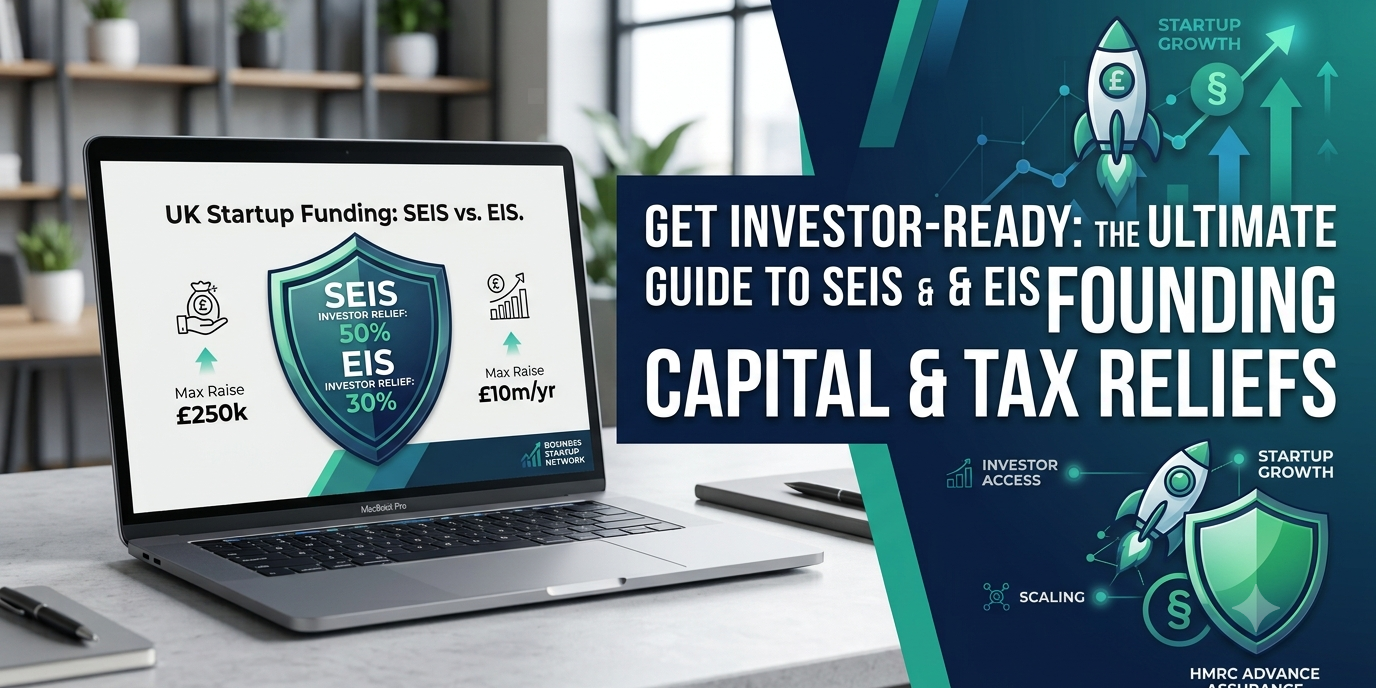
What is the difference between SEIS and EIS for UK startups?
The Seed Enterprise Investment Scheme (SEIS) is designed for very early-stage startups (under 3 years old), allowing them to raise up to £250,000 while offering investors 50% income tax relief. The Enterprise Investment Scheme (EIS) targets more mature companies (usually under 7 years old), allowing them to raise up to £10 million annually with a 30% tax relief incentive for investors.
If you are looking to raise equity investment from angel investors or venture capital (VC) funds in the UK, there are two acronyms you absolutely must master: SEIS and EIS.
The UK has one of the most founder-friendly early-stage funding ecosystems in the world, largely because the government actively minimises the financial risk for private investors. If your startup isn’t structured to offer these tax reliefs, most UK angel investors will simply refuse to look at your pitch deck.
Following significant updates to funding ceilings, here is how to leverage these schemes to make your startup highly attractive to investors.
SEIS vs. EIS: At a Glance
The rules divide early-stage companies strictly by asset size, employee count, and trading history.

Seed Enterprise Investment Scheme (SEIS)
-
The Target: Early-stage, high-risk, pre-seed setups.
-
Company Limits: Your startup must have less than £350,000 in gross assets, fewer than 25 full-time employees, and must have been trading for less than 3 years.
-
The Investor Incentive: Individuals can invest up to £200,000 per tax year and deduct 50% of that amount directly from their UK income tax bill. If the startup fails, they can also claim loss relief, meaning up to 86% of their initial capital is effectively protected.
Enterprise Investment Scheme (EIS)
-
The Target: Scale-ups moving into larger seed rounds or Series A.
-
Company Limits: Thanks to expanded caps, eligible non-knowledge-intensive companies can now have up to £30 million in gross assets before a share issue and fewer than 250 employees. The company must generally be under 7 years old.
-
The Investor Incentive: Investors receive 30% income tax relief on investments up to £1 million per tax year (or £2 million if investing in Knowledge-Intensive Companies).
Critical Rule: Within a single funding round, SEIS shares must be issued before EIS shares. If you accidentally issue EIS shares first or simultaneously within the same block, you could permanently disqualify your company from utilizing the remaining pool of 50% SEIS tax relief.
Step-by-Step: Securing “Advance Assurance” from HMRC
Before an investor writes a cheque, they will ask: “Do you have Advance Assurance?” This is an official document from HMRC confirming that your company meets all the legal requirements of the scheme

Step 1: Verify You Aren’t an “Excluded Trade”
Most standard tech, SaaS, e-commerce, manufacturing, and service businesses qualify. However, HMRC explicitly excludes certain industries from SEIS/EIS, including financial services, property development, legal/accountancy services, and hotels.
Step 2: Gather Your Core Documentation
You cannot apply with just an idea; you need a paper trail. Prepare your:
-
Incorporation certificate and current Articles of Association.
-
A clean, 3-year financial forecast showing how the investment will be deployed.
-
A professional business plan or highly detailed pitch deck.
Step 3: Prove the “Risk to Capital” Condition
HMRC will reject your application if they think your company is a safe shell designed solely to shield tax. Your documentation must clearly show that the business has long-term growth objectives, plans to hire and scale, and that there is a genuine commercial risk that the investor could lose their money.
Step 4: Submit Electronically via GOV.UK
Submit your application package using the online HMRC compliance portal. The review process typically takes between 15 to 40 working days.
In-Depth Funding Tips for Bootstrapped Founders
-
Show Name-Dropped Investor Interest: HMRC will no longer grant Advance Assurance to companies just “fishing” for approval. To get your application reviewed, you must provide the name, address, and intended investment amount of at least one potential investor who has expressed interest in backing you subject to assurance.
-
Avoid the “Preferential Rights” Trap: When drafting your Shareholders’ Agreement or updating your Articles for an investment round, ensure the shares issued to SEIS/EIS investors do not carry any preferential rights to dividends or company assets upon liquidation. If the shares are deemed “low risk” due to preference clauses, HMRC will retroactively disqualify the tax reliefs, leaving your investors with a massive tax headache.