The Lean Startup – Most new businesses fail. But what is truly tragic is that most of those failures are completely preventable.
In the early days of a new venture, it is easy to get caught up in the excitement of building a product. Founders spend months, sometimes years, developing a flawless, feature-rich platform in complete isolation, only to launch it and realize nobody actually wants to buy it.
This is the exact trap that the Lean Startup methodology was designed to solve. Popularised by Eric Ries, this approach treats a new business as a scientific experiment. By prioritising validated learning, rapid experimentation, and customer feedback over assumptions, you can stop wasting your startup runway and build a highly scalable company.
🔍 What is The Lean Startup Method?
At its core, the lean startup is about eliminating waste. In a traditional business model, you write a massive business plan, secure funding, build your product, and then try to sell it.
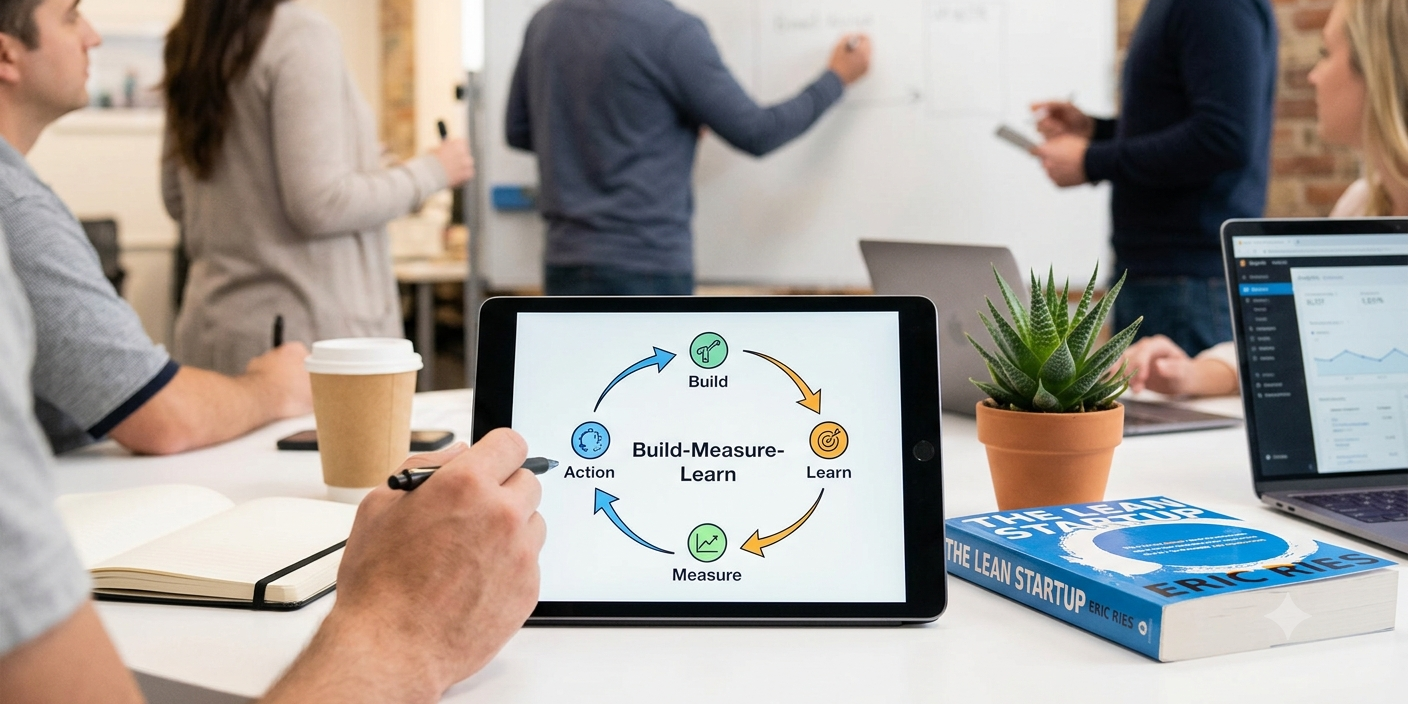
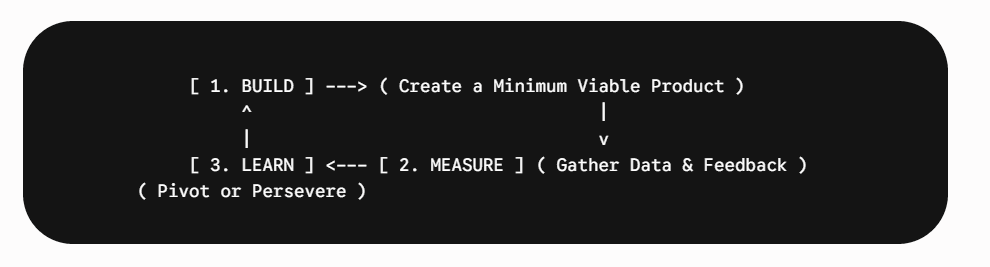
The lean approach flips this on its head. It assumes that in a startup’s early stages, you suffer from “extreme uncertainty,” meaning you do not actually know who your customer is or what they want. Therefore, your primary goal is to learn as quickly as possible using a continuous feedback loop: Build-Measure-Learn.
.
🛠️ 3 Core Steps to Apply the Lean Startup Framework Today
To put the lean startup principles into action without getting overwhelmed by theory, focus on these three core operational phases:
1. Formulate Your Core Hypotheses
Every business is built on a series of untested assumptions. You must break these down into two main categories:
-
The Value Hypothesis: Does your product actually deliver value to customers once they use it?
-
The Growth Hypothesis: How will new customers discover and adopt your product?
2. Launch a Minimum Viable Product (MVP)
Do not wait until your product is perfect to launch it. An MVP is the absolute simplest version of your product that allows you to start the Build-Measure-Learn feedback loop. Whether it is a basic landing page, a manual concierge service, or a simple prototype, the goal is to test your hypotheses with real customers using minimal resources.
3. Choose: Startup Pivot or Persevere
Once you collect real data from your MVP, you face a critical decision. If your assumptions were correct, you persevere and continue improving the product. If the data shows your target market isn’t interested, you pivot, which means changing your strategic direction without changing your core vision.
⚠️ The Biggest Misconception About “Going Lean”
Important Note: The lean startup does not mean building a buggy, low-quality product, releasing it to the public, and hoping for the best.
“Lean” does not mean cheap. It means efficient. It is about ensuring that every ounce of effort, development time, and marketing budget your team spends is directly contributing to validated learning. If you build something nobody wants, it doesn’t matter if you did it on time and on budget; it is still a waste of resources.
🏆 The Takeaway & Call to Action
Your early startup speed is powered by pure hustle, but your long-term survival is determined by how quickly you can systemise your feedback loops. By adopting the lean startup methodology, you build a business that is flexible, highly adaptive, and engineered to scale safely.
Ready to Build a Systemised, Scalable Business?
Building a great product is only half the battle. To learn how to automate your processes, protect your equity, and establish a foundation that is completely investor-ready, explore our foundational masterclass: Strategic Growth & Operational Readiness: Building a Scalable Startup Foundation.